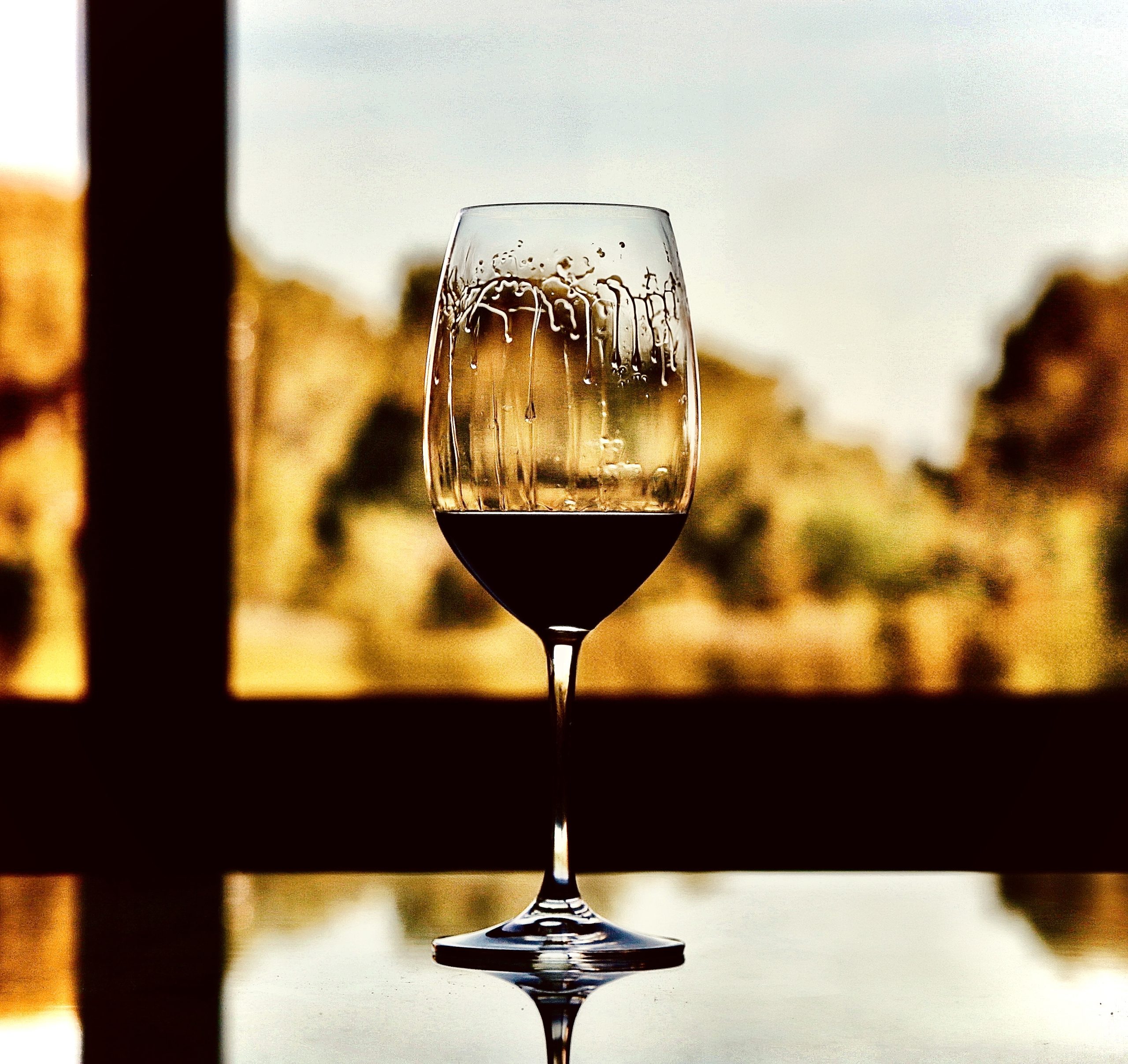
When you swirl a wine glass, it's easy to notice how fine droplets slowly slide down the glass. These are known as lees. tears o wine legs, And although they are often associated with quality, the truth is that their presence does not always indicate a better wine, but rather an interesting physical and chemical reaction.
Tears are formed by the Marangoni effect, This phenomenon occurs due to the difference in surface tension between alcohol and water. When wine adheres to the walls of the glass, the alcohol begins to evaporate faster than the water, leaving behind a denser film that, as it accumulates, drips down.
The speed and density of these tears are influenced by several factors:
- Alcohol content: The higher the alcohol content, the more visible and persistent the tears will be, as evaporation is more intense.
- Glycerin and sugars: Wines with more glycerin or a higher residual sugar content produce thicker and slower tears, giving a visual sensation of greater unctuousness.
- Temperature and humidity: A dry and warm environment promotes faster evaporation of the alcohol, accentuating the effect.
While observing the wine's legs is a fascinating exercise, it's not a definitive indicator of quality. A wine with abundant legs may be smooth and concentrated, but that doesn't guarantee its balance or aromatic complexity. Ultimately, what matters is what happens in the glass and, above all, on the palate.